
Social Media Recruiting Playbook
Introduction
Social media has transformed how companies find and engage candidates. Traditional job postings reach active job seekers, but social media allows you to connect with passive candidates who might be open to the right opportunity.
Why Social Media Recruiting
Social media gives you access to passive candidates, provides rich context about candidates, enables relationship building, strengthens your employer brand, and is often more cost-effective than paid job boards or recruiting agencies.
LinkedIn Recruiting Strategies
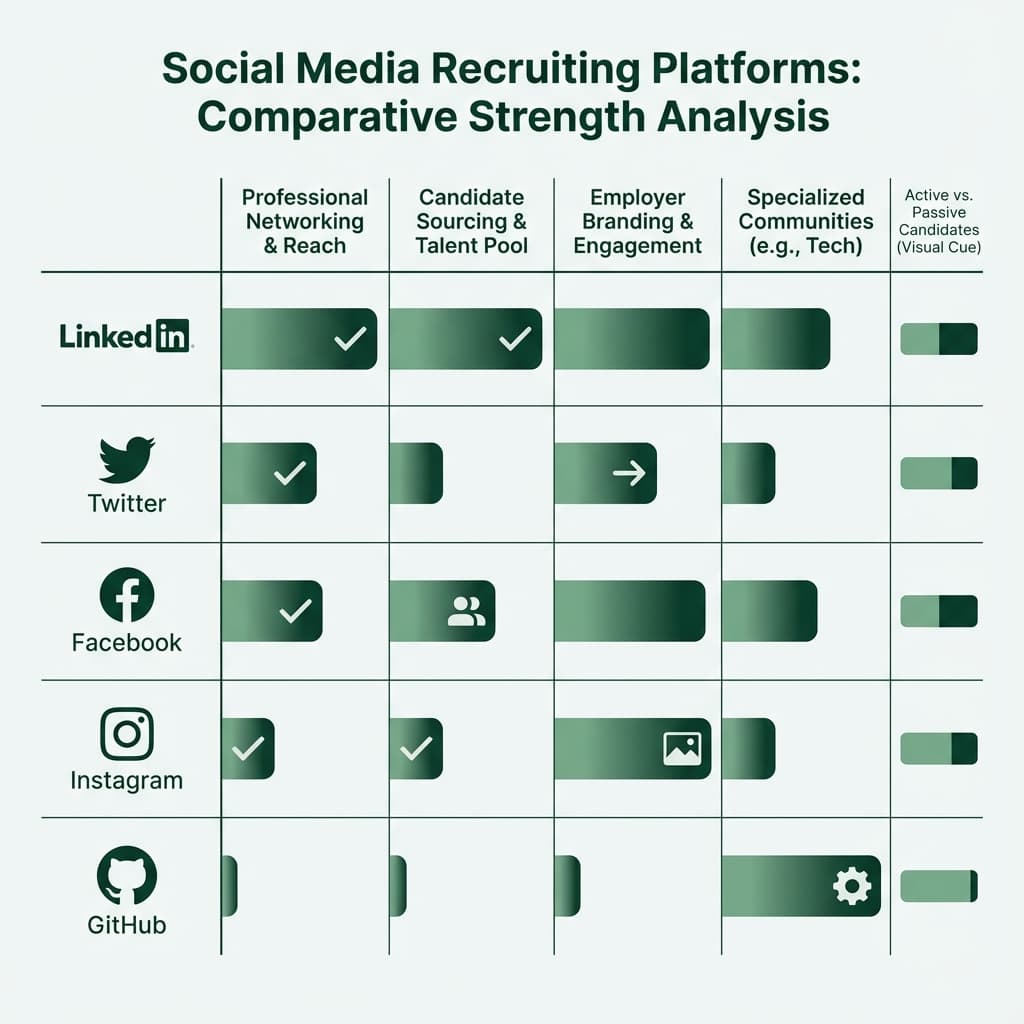
LinkedIn is the most widely used platform for professional recruiting. Start by optimizing your company page with a professional logo, compelling description, and regular updates showcasing your culture and values.
Use LinkedIn's search tools to find potential candidates. When reaching out, personalize your messages. Post job openings on your company page and encourage employees to share them with their networks.
Twitter for Recruiting
While LinkedIn is the default platform, Twitter offers unique opportunities for tech, creative, and startup roles. Build a presence by sharing valuable content related to your industry. Use Twitter search and hashtags to find potential candidates.
Other Social Platforms
Facebook can work for certain roles. Instagram is increasingly relevant for creative roles and companies with strong visual brands. GitHub is essential for recruiting developers. Stack Overflow is valuable for technical recruiting. Dribbble and Behance are go-to platforms for recruiting designers.
Content Strategy
Define your goals and audience. Create a content calendar to ensure consistent posting. Mix different types of content including job postings, company news, employee spotlights, industry insights, and behind-the-scenes content. Modern recruiting platforms can help automate social media job distribution, such as Flowxtra.
Building Employer Brand
Your employer brand is your reputation as a place to work. Define your employer value proposition, communicate your values consistently, highlight employee stories, be authentic and transparent, showcase diversity, and share your company's impact and mission.
Engagement and Outreach
Start with warm outreach to candidates you already have a relationship with. Personalize every outreach message. Be respectful of people's time. Respect boundaries and social norms. Offer value even when you do not have a relevant opening.
Common Mistakes
- Only posting jobs: Provide value beyond job postings
- Being too corporate: Be authentic and conversational
- Ignoring engagement: Respond to comments and messages
- Misrepresenting your company: Be honest about culture
- Sending generic messages: Personalize all outreach
What to Do Next
- Audit your current social media presence
- Choose platforms based on where your target candidates are active
- Create a content calendar for the next month
- Optimize your company profiles
- Start engaging with potential candidates
- Integrate with your overall hiring workflow
- Learn about job distribution strategies